The Manufacturing Skills Gap Is Getting Worse. Here’s How Smart Employers Are Responding
3.8 million manufacturing jobs will need to be filled by 2033.
And according to a Deloitte and Manufacturing Institute study, 1.9 million of them could go unfilled if the industry doesn’t act now.
Yes, 1.9 million. That’s not a rounding error or typo.
These numbers aren’t new. Manufacturers have been sounding the alarm for years. From 2018 through 2024, attracting and retaining a quality workforce was cited as the #1 business challenge by manufacturers surveyed in the National Association of Manufacturers’ Outlook Survey — more frequently than any other concern, 64% of the time.
The skills gap in manufacturing is a structural problem, not a cyclical one. It predates any single economic event and it’s not self-correcting.
Understanding what’s actually driving it is the first step to doing something about it.
Why Is the Manufacturing Skills Gap Getting Worse?
Manufacturing executives have been losing sleep over this question for years. Several compounding factors are behind the continuing labor shortage:
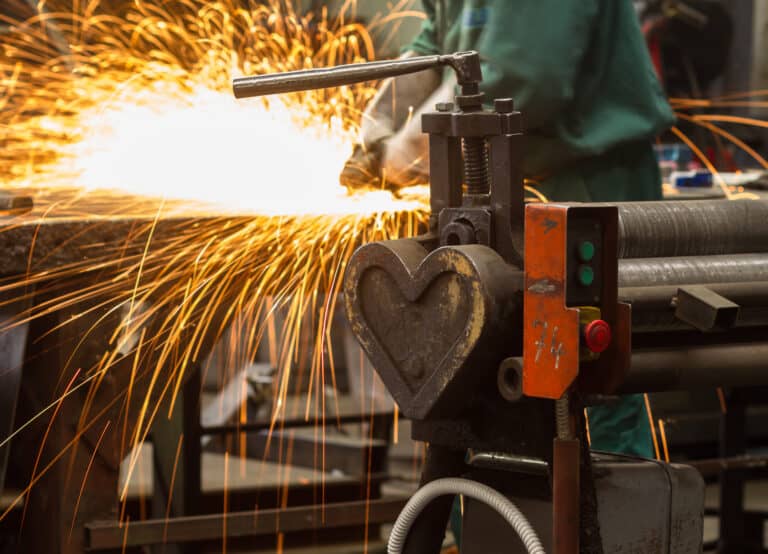
- The retirement wave is accelerating. The oldest Baby Boomers turn 80 in 2026. For years, this generation propped up manufacturing’s experienced workforce. Now they’re exiting en masse, taking with them decades of institutional knowledge that no onboarding checklist can replace. These are the machinists who know why the line runs better on second shift, and the welders who can troubleshoot by sound alone.
- Changing demographics across the workforce. As experienced workers retire, newer workers often lack the technical skills and hands-on knowledge to operate in today’s advanced manufacturing environment. The knowledge transfer problem is real, and it’s happening faster than most companies planned for.
- A perception problem with the next generation. Gen Z is increasingly open to skilled trades, but factory work remains the one blue-collar path young workers are actively steering away from. Manufacturing hasn’t fully cracked the code on making the floor feel like a career, not just a job.
- Evolving worker expectations. Younger workers want higher pay, flexibility, clearer paths to advancement, and workplaces where they feel invested in. Many manufacturers haven’t adapted quickly enough, but the ones who have are winning the talent war.
- Digitization: The changing nature of manufacturing jobs, marked by increased automation and technology, demands more technical skills than previous positions, leaving many potential employees underqualified.
What Manufacturing Jobs Are Hardest to Fill Right Now?
The shortage isn’t evenly distributed. According to the Manufacturing Institute’s Q4 2025 Outlook Survey, 72.1% of manufacturers said they needed to fill skilled production roles — specifically calling out technicians, welders, and machinists as the hardest to source.
Beyond those three, manufacturers are consistently struggling to find qualified:
- CNC machinists and operators
- Maintenance technicians
- Assemblers and production workers
- Forklift operators
- Machine operators
- Quality control technicians
These aren’t entry-level positions you can fill with a warm body and a week of training. They require demonstrated skills, often certifications, and the kind of hands-on experience that takes time to develop.
That’s what makes the gap so hard to close quickly.
What Your Company Can Do to Address the Skills Gap
The talent shortage didn’t develop overnight. It won’t be solved overnight either.
But manufacturers who are gaining ground share a few things in common: they’re investing in their people, broadening where they look for talent, and increasingly partnering with outside experts to accelerate hiring.
Here’s where to focus.
Step 1: Keep Up With Industry Changes
The manufacturing industry evolves continuously. Staying competitive means ensuring your team’s skills and knowledge are current — not just for new hires, but for the people already on your floor.
Manufacturing Institute’s 2026 State of Workforce Training report revealed that manufacturers are now spending $31.9 billion annually on training (up from $26.2 billion in 2019). And 54.4% of manufacturers surveyed said they’re actively increasing those efforts.
The industry has voted with its wallet: training isn’t optional anymore.
Practical ways to stay ahead of the curve:
- Continuous upskilling and reskilling programs for existing workers
- Free training, licensing, and certification support
- Internships and apprenticeship programs (nearly one-third of manufacturers now use them)
- DEI initiatives to engage the growing number of minorities entering the industry and minority-owned manufacturing companies
Build these into your recruiting and onboarding processes so they become part of your employer brand, not just a line item on an HR spreadsheet.
Step 2: Embrace Technology (and Train Your Team to Use It)
Manufacturing has undergone a significant technological shift. Automation, robotics, and advanced programming aren’t the future anymore — they’re the floor.
Equipping your workforce to thrive in that environment requires intentional investment in:
- Robotics and Automation: Introduce your team to the systems they’ll be working alongside. Employees who understand how to program and operate automated equipment are more productive and more engaged, because they can see the impact of their work more clearly.
- Advanced Programming: CNC programming, software management for automated systems, and equipment diagnostics skills separate manufacturers who can scale from those who can’t. Job-related technical skills training was cited as the top training priority by 88.4% of manufacturers in MI’s 2026 survey, with new technology and equipment training close behind at 64.1%.
The investment pays off. Among manufacturers who offer robust training programs, 63.4% reported improved employee productivity and 53.5% said it extended the longevity of their employees’ careers.
Step 3: Build Mentorship and Knowledge Transfer Into Your Culture
Mentorship has gained real traction as a tool against the skills gap, and it’s not hard to see why.
When a 30-year machinist walks out the door, everything in their head goes with them unless you’ve built systems to capture it.
A few approaches worth considering:
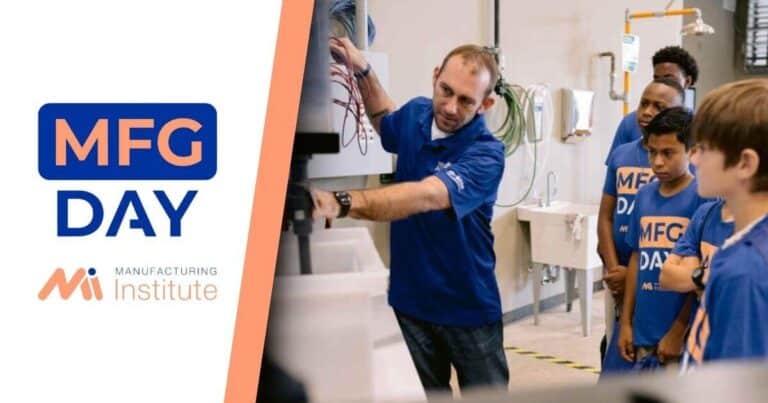
- High School and Vocational Partnerships: Collaborate with local high schools, trade programs, and vocational tech schools to create pipelines before workers even enter the job market. Students get hands-on exposure. You get a look at promising talent before your competitors do.
- Structured Knowledge Transfer: Pair your most experienced technicians and machinists with newer workers in formal mentorship arrangements. Don’t leave this to chance — build it into job descriptions and recognize it in performance reviews.
- Credentials and Certifications: Mentorship programs that end with a certification or credential give participants something tangible. By the time they’re on the floor independently, they have the qualifications to back up their experience.
One Emerging Note Worth Watching
Manufacturing Institute’s microcredentials research found that manufacturers hire candidates with no formal credentials at a significantly higher rate than other industries, and often do their own skills-vetting through hands-on assessments rather than relying on what’s on paper.
If you’ve ever hired someone because they could speak fluently about fixing their own car or wiring their garage, you already know how this works. Formalizing that instinct through structured programs and apprenticeships is the next step.
Step 4: Engage Diverse Sources of Talent
The manufacturers closing the skills gap fastest aren’t just fishing in the same ponds. They’re expanding where they look:
- Veterans: Programs like the Heroes Make America connect manufacturers with transitioning service members — nearly 200,000 per year — who bring discipline, technical aptitude, and a strong work ethic. Veterans are one of the most underutilized talent pipelines in manufacturing, and the ones who make it to the floor consistently outperform expectations.
- Trade Programs and Vocational Schools: Community college enrollment in vocational programs is climbing. These students are actively choosing a path into skilled trades. Meeting them where they are through partnerships, sponsorships, or even just showing up to career days builds the pipeline before the need is urgent.
- Adult Education and Reskilling: Individuals looking to transition careers, re-enter the workforce, or upskill are an often-overlooked source of motivated candidates. The right structure and support can turn a career changer into one of your most committed employees.
- Underrepresented Groups: Increasing outreach to women, minorities, and individuals re-entering the workforce after incarceration creates a larger, more diverse candidate pool — and research consistently shows diverse teams perform better.
How Manufacturing Staffing Agencies Help Close the Skills Gap
Training programs, apprenticeships, and community partnerships matter enormously. But they’re long-game strategies, and most production floors don’t have the luxury of waiting a year for the pipeline to produce results.
That’s why more manufacturers are pairing long-term workforce development with a shorter-term solution: partnering with a dedicated manufacturing staffing agency to strengthen hiring pipelines while reducing pressure on internal teams.
An agency that specializes in production and skilled trades environments can help with:
- Recruiting for hard-to-fill roles like welders, CNC machinists, and maintenance technicians
- Pre-screening candidates for the specific technical skills your operation requires
- Shift-specific hiring for high-volume or multi-shift environments
- Safety evaluation and compliance support before workers ever reach your floor
- Temp-to-hire arrangements that let you evaluate fit before making a permanent commitment
- Access to passive candidates who aren’t actively job searching but are open to the right opportunity
At AIS, for example, our centralized sourcing model averages three days to fill, and our placed workers stay at a 15% higher retention rate than the national average.
That’s not a coincidence. It’s what happens when a staffing partner is built exclusively around manufacturing and knows the roles, the environment, and what makes someone actually last on the floor.
What Does a Manufacturing Staffing Agency Do?
A manufacturing staffing agency helps employers recruit, screen, and place production, skilled trade, and warehouse and distribution workers.
These agencies typically support temporary, temp-to-hire, direct hire, and onsite staffing needs for high-volume manufacturing environments — handling the sourcing and pre-qualification work so your internal team can focus on running operations.
The best staffing partners evaluate your workforce holistically: looking at where turnover is happening, what shifts are consistently understaffed, and what your onboarding process might be costing you in retention.
That’s the difference between a vendor and a partner.
Finding the Right Workers Is Possible, But It Takes the Right Strategy
The manufacturing skills gap is real, persistent, and structural. It won’t be closed by any single tactic.
But manufacturers who combine internal investment in training and culture with strategic external partnerships are consistently outperforming those who try to solve the problem alone.
Alliance Industrial Solutions helps manufacturing companies in Ohio and North Carolina find qualified production workers, skilled trades professionals, and everything in between — often pre-qualifying candidates within days.
Whether you need to fill a single machinist role or build a more reliable production team with a large onsite staffing presence, we’re built for exactly this kind of challenge.
Struggling to fill manufacturing roles? Let’s talk through your workforce plan.
Manufacturing Skills Gap Frequently Asked Questions
Why is there a skills gap in manufacturing?
The manufacturing skills gap is the result of several compounding factors: an accelerating wave of Baby Boomer retirements removing decades of institutional knowledge from the workforce, a persistent perception problem that steers younger workers away from factory careers, and the increasing technical demands of modern production environments that outpace the available pipeline of qualified workers.
What manufacturing roles are hardest to fill right now?
According to the Manufacturing Institute’s Q4 2025 Outlook Survey, 72.1% of manufacturers cited a need to fill skilled production roles — with technicians, welders, and machinists named specifically. CNC operators, maintenance technicians, and experienced machine operators are consistently among the hardest roles to source.
How can manufacturers improve hiring and retention?
The manufacturers gaining the most ground are doing a few things consistently: investing in workforce training and upskilling, building mentorship programs that capture institutional knowledge before it walks out the door, expanding their talent pipelines through vocational partnerships and underrepresented groups, and partnering with specialized staffing agencies to maintain hiring velocity while long-term strategies develop.
Can staffing agencies help with skilled manufacturing hiring?
Yes — particularly agencies that specialize exclusively in manufacturing and production environments. A dedicated manufacturing staffing agency brings role-specific recruiting expertise, established candidate pipelines, and pre-screening processes built around the actual skills your operation requires. For hard-to-fill roles like welders, machinists, and maintenance technicians, that specialization makes a meaningful difference in both speed and quality of hire.