If your staffing agency can’t tell you what LOTO stands for or can’t spot a machine guarding issue on a walkthrough, you have the wrong staffing agency.
That’s not a dig — it’s just the reality of running a safe industrial floor. OSHA’s top ten cited violations aren’t obscure technicalities. They’re the same hazards, showing up year after year, in facilities just like yours.
Fall protection. Hazard communication. Machine guarding. Powered industrial trucks.
The list doesn’t change much because the problem doesn’t change much: workers arrive on the floor without adequate preparation, and someone pays for it. In claims, in downtime, in OSHA citations, or worse.
At AIS, we’ve invested in OSHA 10 certification for our internal team specifically so we can be part of the solution, not the problem. Here’s what the current list looks like and why it should matter to anyone staffing a manufacturing or warehouse environment.
The List Hasn’t Changed Much. That’s the Problem.
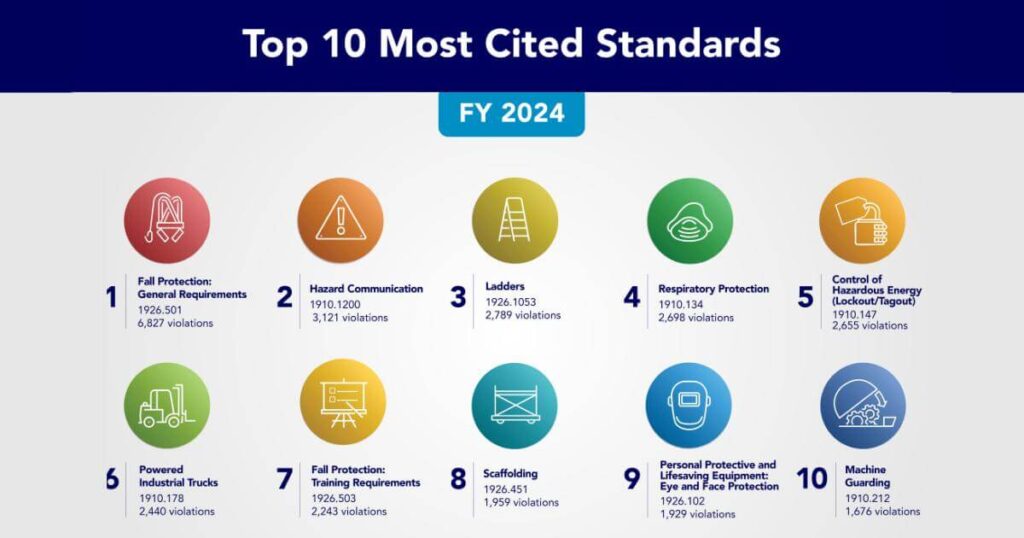
The most recently published Top 10 list reflects inspections conducted across all industries by federal OSHA. Here’s where things stand:
- Fall Protection – General Requirements
- Hazard Communication
- Ladders
- Respiratory Protection
- Lockout/Tagout (Control of Hazardous Energy)
- Powered Industrial Trucks
- Fall Protection – Training Requirements
- Scaffolding
- Eye and Face Protection
- Machine Guarding
The top of this list has been stubbornly consistent for over a decade. Fall protection sits at #1. Hazard communication is #2. And violations tied directly to the industrial environments AIS operates in — lockout/tagout, powered industrial trucks, machine guarding — show up every single year.
That’s not bad luck. That’s a training and awareness problem. And it’s one we take personally.
What These Violations Actually Mean in a Warehouse or Manufacturing Environment
Here’s the thing: these aren’t obscure standards buried in the CFR. They’re the most cited violations in the country.
Not every item on this list applies to every industrial facility, but if you’re running a warehouse or manufacturing floor, a handful of these should be on your radar daily.
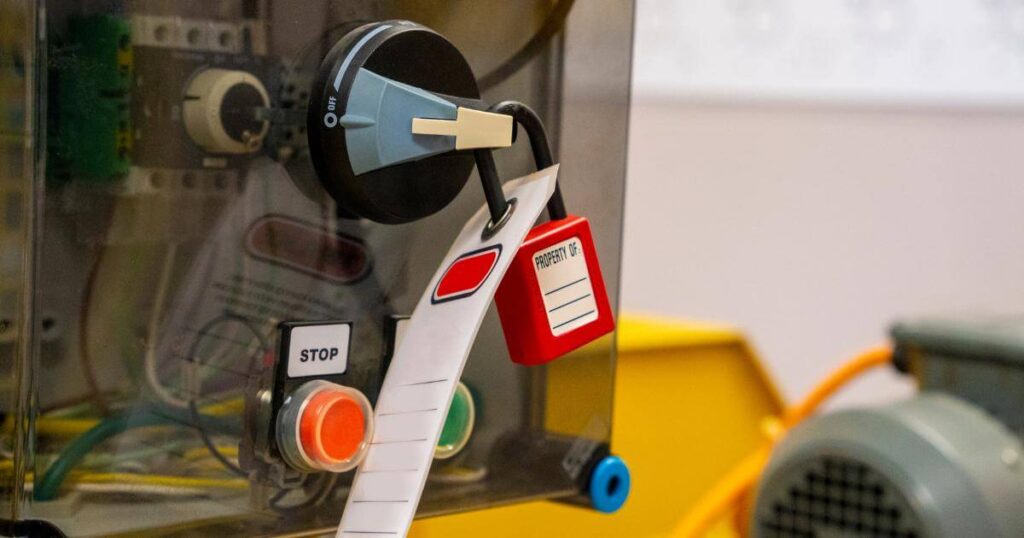
Lockout/Tagout (#5)
One of the most serious on the list. Maintenance or repair work on machines that aren’t properly de-energized causes catastrophic injuries. And it’s almost entirely preventable with proper procedure and trained workers who respect the protocol.
Powered Industrial Trucks (#6)
Forklifts are involved in tens of thousands of injuries every year. Operator certification and pre-shift inspections aren’t bureaucratic box-checking; they’re what keep your team going home in one piece.
Machine Guarding (#10) and Hazard Communication (#2)
These two round out the violations most likely to show up in an industrial setting. Workers need to understand what they’re working around before they ever clock in on Day 1, whether that’s an unguarded press or a chemical they’re handling.
Why Our OSHA 10 Certification Is Your Advantage
We’ve invested in OSHA 10-Hour certification for our internal team not because we had to, but because we believe a staffing partner who can’t speak your language can’t fully protect your operation.
You shouldn’t have to teach your staffing agency what machine guarding is. You shouldn’t have to explain hazard communication before a walkthrough. We’ve done that homework so you don’t have to.
Here’s what that looks like in practice:
- We audit your floor, not just walk it. Our OSHA 10-certified team members know what to look for: cluttered aisles, unguarded equipment, improper chemical storage. We identify red flags before they become a line on your OSHA 300 log.
- We prep our associates before Day 1. Every AIS associate goes through a safety-first orientation tailored to the industrial environment. They arrive understanding lockout/tagout, hazard communication, and your basic floor protocols — not learning them on the job at your expense.
- We speak your language. When you flag a safety concern, we get it immediately. No translation required. That means faster response, better communication, and fewer grey areas when it comes to joint-employer responsibility.
The result: OSHA 10-certified teams see lower recordable incident rates and reduced average claim costs. A safe floor isn’t just the right thing. It’s a better business outcome.
The Bottom Line
This list isn’t going away. The hazards that topped it in 2015 are still topping it today. What changes is whether your operation — and your staffing partner — is doing something about it.
We view safety as a proactive risk-mitigation strategy. We’re not just preventing injuries; we’re helping protect your mod rating, lower your incident rates, and keep avoidable costs off your balance sheet.
Think of it this way: hiring a staffing agency that treats safety as an afterthought is like running a production line without a safety protocol. It’s fine…until it isn’t.
We’d rather help you make sure it stays fine.
Ready to put OSHA 10-certified expertise to work on your floor? Let’s talk.
For the most current version of OSHA’s Top 10, visit osha.gov/top10citedstandards. The list is updated annually following the close of each federal fiscal year.